Hidden Sauna Costs: What to Expect and How to Avoid Surprises

That attractive sticker price is just the starting point. Once delivery, installation, permits, and electrical work come into play, the total cost of owning a traditional sauna can rise faster than expected.
In this guide, you’ll learn how to spot and plan for the most common hidden costs—and how to keep your project on budget without cutting corners.
We’ll cover:
-
One-time costs like delivery, assembly, permits, and electrical upgrades
-
Ongoing expenses such as energy use, water, and routine maintenance
-
Accessory budgeting, maintenance planning, and a comparison to infrared saunas
-
Cost breakdown tables, checklists, and tips to get accurate quotes
This guide is based on my experience helping hundreds of homeowners choose, budget for, and install traditional saunas that actually fit their needs—without surprise costs down the line.
Let’s break down the full cost of ownership so you can plan confidently—whether you're building a backyard retreat or upgrading your indoor wellness space.
What Are the Common Hidden Costs Beyond the Traditional Sauna Price?
Hidden costs are one-time or near-term expenses that go beyond the advertised price—and they’re easy to overlook. These often come from practical needs like:
-
Shipping large sauna components into your home
-
Hiring certified installers (sometimes required for warranties)
-
Pulling permits for electrical work
-
Upgrading your electrical system to handle a 240V heater circuit
These fees vary depending on your location, your setup, and the level of service you choose. Identifying them early helps you get accurate quotes and avoid unexpected costs.
Here are some of the most common hidden costs and what typically triggers them:
-
Delivery charges – Can range from basic curbside drop-off to white-glove placement inside the home. Priced based on distance, weight, and the difficulty of the delivery access.
-
Assembly or labor – Costs for professional installation, especially when your site requires special handling or when the manufacturer recommends certified installers.
-
Permits and inspections – Required in many areas when electrical or structural work is involved.
-
Electrical upgrades – If your home doesn’t already support the sauna heater’s voltage and amperage needs, you may need a new dedicated circuit, subpanel, or even panel upgrades.
These line items can be the difference between staying on budget or going over. Next, we’ll dig into electrical readiness, since it’s often one of the biggest cost variables in any sauna build.
How Do Electrical Installation Requirements Impact Sauna Costs?
Electrical work is often the biggest variable in your total sauna cost—especially for traditional electric heaters, which typically require a dedicated 240V circuit and specific amperage based on the unit's wattage.
If your electrical panel has available capacity and is located near the sauna site, installation can be relatively simple: your electrician may just need to run a dedicated line and install a breaker. But in older homes or when the panel is full, you may need a subpanel or full panel upgrade, which can significantly increase costs.
Your electrician’s quote will depend on:
-
The wattage of your sauna heater
-
The distance from your electrical panel to the sauna location
-
Local labor rates and any required permits
To avoid surprises, ask these questions before you buy a heater:
-
Does my panel have enough spare capacity for a 240V circuit?
-
Will this install require a new subpanel or just an added breaker?
-
What are the estimated labor hours and permit costs?
Confirming your home’s electrical readiness not only helps you budget accurately—it can also affect delivery timelines and installation scope, especially if access is limited or upgrades are required.
What Are the Typical Delivery, Assembly, and Permit Fees?
Delivery, assembly, and permit fees can vary significantly depending on your location, service level, and local building codes. Without clear estimates, what starts as a budget-friendly sauna can quickly turn into a mid-range investment.
Here’s a breakdown of what to expect:
Delivery Options
-
Curbside drop-off – Usually included or lower in cost, but you’re responsible for moving components inside.
-
White-glove delivery – Includes indoor placement and, in some cases, debris removal. Costs more due to added labor and special equipment for large or heavy panels.
Assembly Costs
-
Covers tasks like framing, bench installation, and wiring control units.
-
Some manufacturers require certified installers to maintain the product warranty—this adds to the upfront cost but can reduce long-term risks.
Permits and Inspections
-
Local rules vary:In some areas, saunas are treated as minor alterations.Others require formal electrical permits and inspections, often with fixed fees.
-
Check early with your local building department to avoid delays or unexpected costs.
Below is a quick comparison table summarizing typical fee ranges and when they usually apply.
Service
Delivery (curbside)
Delivery (white-glove)
Assembly / Installation labor
Local permits & inspections
Typical Trigger
Accessible driveway, no stairs
Indoor placement, stairs, long carry
Manufacturer-specified install or complex site
Electrical work or structural modifications
Example Cost Range
$0–$200
$200–$800
$300–$1,500
$50–$500
Your delivery method and whether a certified installer is required are often the biggest cost drivers in this phase. Before you buy, confirm what’s included and compare bundled packages versus à la carte service options—it can make a big difference in your final total.
Next, we’ll break down the ongoing operating costs to factor into your long-term budget.
How Much Does It Cost to Run a Traditional Sauna Monthly?
Your monthly operating costs mostly depend on three factors:
-
The wattage of your heater
-
How often and how long you run it
-
Your local electricity rate
Water use—for steam or cleaning—is usually minimal.
We’ll walk through a simple calculation and real-world example in the next section to help you estimate your monthly spend based on your habits.
Energy-efficient habits can help keep costs steady:
-
Pre-heat only as needed
-
Use tight insulation
-
Install programmable or timer-based controls
The table below shows typical usage scenarios to help you estimate monthly kWh and cost based on real-world use.
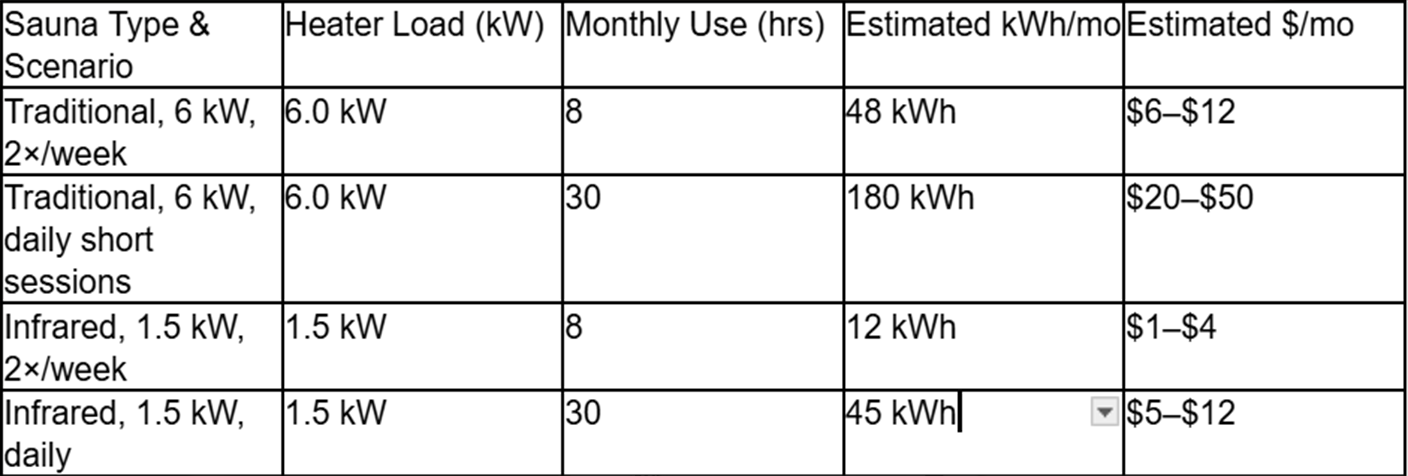
A note on infrared saunas:
They typically use fewer kilowatt-hours per session, but your local electricity rate will ultimately determine the actual cost difference. Use these estimates to decide whether better insulation or smart controls could save you money over time.
Up next: what to expect from water use and cleaning needs.
What Is the Average Electricity Consumption of a Traditional Sauna?
Electricity use depends on two main factors: heater size and session length. Most home sauna heaters range from 3.5 kW to 8 kW.
Here’s a quick example:
-
A 6 kW heater running for one hour uses 6 kWh
-
At $0.12 per kWh, that’s about $0.72 per session
-
If you run it 10 hours per month, you’ll spend around $7.20 monthly
Use this basic formula to estimate your own costs:
Heater kW × Hours Used × Electricity Rate = Monthly Cost
This simple math lets you compare occasional use (like 2–3 sessions a week) with daily habits—and helps you pick a heater and controls that fit your lifestyle and energy budget.
Now that electricity is covered, let’s look at the smaller but still relevant role of water in sauna operation and upkeep.
How Does Water Usage Affect Running Costs?
Water usage in a traditional sauna is minimal compared to electricity consumption. It’s mainly used for:
-
Pouring on sauna stones to create steam (typically less than 1 liter per session)
-
Routine cleaning between sessions and occasional deep cleans
While water itself is inexpensive, moisture exposure can impact long-term maintenance costs:
-
Repeated steam and humidity may accelerate wood wear, especially in poorly ventilated spaces
-
Cleaning supplies and minor repairs add up over time, though the costs are generally modest
Tips to reduce water-related wear and tear:
-
Use measured pours instead of splashing water
-
Maintain good ventilation so surfaces dry quickly
-
Stick to a regular cleaning schedule to prevent buildup and premature damage
Because maintenance frequency depends heavily on your usage patterns and local environment, the next section will cover ongoing maintenance and repair costs to help you plan ahead.
What Are the Essential Maintenance and Repair Expenses for Traditional Saunas?
Like any wellness investment, a traditional sauna requires regular upkeep to stay safe, efficient, and comfortable. Plan for routine wood care, periodic stone replacement, heater servicing, ventilation cleaning, and occasional repairs to electrical or structural components.
Here are the most common maintenance tasks:
-
Wood maintenance – Prevents cracking and discoloration; usually involves light sanding, approved oils or sealants (for exteriors), and occasional bench board replacement
-
Heater and controls – Heating elements, sensors, and controls may need servicing or replacement every few years, depending on usage and moisture exposure
-
Sauna stones – Break down over time and may need replacing to maintain proper steam output
-
Ventilation cleaning – Keeps air flowing properly and prevents mildew buildup
The table below outlines these tasks along with recommended frequency and estimated cost ranges, so you can plan for both annual and long-term maintenance.
Maintenance Task
Wood treatment & light sanding
Stone replacement
Heater inspection/element replacement
Ventilation & cleaning
Frequency
6–12 months
1–3 years
5–10 years or as needed
Annually
Typical Cost (DIY or Service)
$20–$150 annually
$50–$200
$100–$1,000
$0–$200
While most maintenance—like wood care and stone replacement—is predictable and relatively affordable, major repairs or full heater replacement can be more expensive. Fortunately, regular upkeep helps extend the life of all components and keeps your total cost of ownership lower.
Next, we’ll explore accessories and upgrades that affect both initial costs and ongoing expenses.
How Often Does Sauna Wood Need Treatment and What Are the Costs?
To keep sauna wood looking good and performing well, plan to inspect and treat it every 6–12 months. The exact frequency depends on:
-
How often the sauna is used
-
Your local climate (humidity, coastal air, etc.)
-
How frequently steam is used from water poured on stones
Typical treatment includes:
-
Light sanding to smooth rough spots or discoloration
-
Applying a manufacturer-approved oil or sealant (especially on exterior-facing wood)
Cost breakdown:
-
DIY supplies: $20–$100 per year
-
Professional wood maintenance: $100–$200 per year
In humid or coastal climates, you may need to treat wood more frequently to prevent decay. In drier climates, you can often go longer between treatments.
Following a regular care schedule and using the products recommended by your sauna manufacturer helps avoid costly repairs and keeps your warranty valid.
Next, we’ll cover heater and stone maintenance, which complements wood care in supporting long-term performance.
When Should You Replace Sauna Heaters and Stones, and What Are the Costs?
Sauna stones typically need replacing every 1–3 years, depending on how often you use water for steam and how well they hold up over time.
-
Replace any stones that crack, crumble, or show signs of deterioration, as damaged stones can harm the heater.
-
A whole pack of replacement stones usually costs $50–$200, depending on size and quality.
Electric sauna heaters typically last 5–10 years, with some components like elements and controls needing attention sooner, depending on usage.
-
Minor repairs (like replacing an element or sensor) are usually affordable
-
Full heater replacement is the most expensive maintenance item, and cost varies by model, wattage, and brand
Signs it may be time for repair or replacement:
-
Uneven heating
-
Unusual noises from the heater
-
Control panel malfunctions or delays
To extend your heater’s life and reduce long-term costs:
-
Use the correct stone type and stack them properly
-
Maintain good ventilation
-
Perform regular inspections for wear or wiring issues
Together with proper wood care, heater and stone maintenance rounds out your core long-term upkeep plan.
Next, let’s look at accessories and optional upgrades that can impact both your initial investment and your ongoing costs.
Which Accessories and Upgrades Add to the Total Sauna Ownership Cost?
Sauna accessories and upgrades range from low-cost essentials to high-end enhancements. Some are critical for safe, long-term use, while others are more about personal comfort and aesthetic upgrades.
Essentials like a bucket, ladle, thermometer, and hygrometer are relatively inexpensive but make a big difference in safety, functionality, and longevity.
Upgrades—such as smart controllers, built-in lighting, premium benches, or audio systems—can add hundreds or even thousands to your total cost, depending on the features you choose.
When budgeting, think in terms of ROI:
-
Practical accessories that protect your sauna and reduce maintenance offer high long-term value
-
Luxury upgrades enhance your daily experience, but may not significantly impact resale value
Here’s a quick guide to help prioritize:
-
Must-Have: Bucket, ladle, thermometer, hygrometer – for basic, safe operation
-
Recommended: Sauna mats, headrests, bench covers – protect wood and improve comfort
-
Optional / Luxury: Advanced controls, integrated LED lighting, sound systems, premium heaters – elevate the experience
Start with function, then add upgrades that align with your personal use and budget.
What Are the Must-Have Accessories for a Traditional Sauna?
Before considering upgrades, it’s important to invest in a few essential tools that protect your sauna and support safe use.
Start with safety and durability:
-
A reliable thermometer and hygrometer help you maintain proper heat and humidity levels, preventing overheating or moisture damage
-
A wooden bucket and ladle allow you to add steam safely—without risking damage to controls or electronics
-
Bench mats, headrests, and cleaning supplies reduce wear on surfaces and make regular upkeep easier
Plan to budget $50–$200 for these core accessories—a modest investment that can significantly lower long-term maintenance costs.
Tip: Get these essentials in place before adding luxury features. They’ll extend your sauna’s life, improve safety, and ensure you're starting off on the right foot.
How Do Luxury Upgrades Affect Your Sauna Investment?
Luxury upgrades—like smart controls, custom lighting, premium wood finishes, and built-in audio—can elevate your sauna experience. They add comfort, convenience, and a personalized feel.
But they also come with higher upfront costs and, in some cases, more complex installation.
A few things to consider:
-
These features rarely reduce energy use enough to offset their price
-
They can, however, boost day-to-day enjoyment and may enhance perceived home value
-
If your goal is a high-end experience, they may be worth the investment
-
If you’re focused on budget and simplicity, prioritize insulation, a quality heater, and essential accessories first
Also, keep in mind:
-
Upgraded electronics may require additional installation time or electrical capacity
-
Some features could affect warranty coverage if not installed according to manufacturer's instructions
Bottom line: weigh the added cost against how often you’ll use the features—and whether they offer long-term value or just short-term appeal.
How Can You Avoid Unexpected Fees When Buying a Traditional Sauna?
The best way to avoid surprise costs is through proactive planning and clear communication before you buy.
Start with the essentials:
-
Confirm your electrical readiness
-
Measure the space and delivery access
-
Request itemized quotes that clearly separate product, delivery, installation, and permit fees
-
Get warranty and return policies in writing
Talk to professionals early—especially your electrician, installer, and local permitting office—to uncover any potential hidden fees, like panel upgrades or permit delays.
Also, ask the seller for both bundled and unbundled pricing. This lets you compare the cost of full-service installation with doing some parts yourself—and gives you more flexibility in budgeting and negotiations.
Pre-Purchase Checklist:
-
Measure and confirm space/access: Doorway widths, stairwells, ceiling height
-
Check electrical panel capacity: Ask an electrician if a 240V dedicated circuit is needed
-
Verify local permit rules: Contact your building department about sauna requirements
-
Request itemized quotes: Break down the costs for product, delivery, installation, and permits
Doing this legwork upfront helps you avoid unexpected fees—and makes any return or warranty conversations much smoother if something changes after purchase.
What Are Common Return Policies and Restocking Fees?
Return policies and restocking fees vary by retailer and depend on factors like product condition and whether installation services were used.
Here’s what to expect:
-
Many large-item sellers charge restocking fees for returned modular units
-
White-glove installations often void return eligibility
-
Fees may be a flat labor charge or a percentage of the purchase price
-
Custom or modified units are usually non-returnable
To avoid unexpected charges, follow these best practices:
-
Inspect the shipment upon delivery and note any visible damage immediately
-
Keep the original packaging until after installation is complete
-
Document any damage with photos in case a return is needed
-
Get written confirmation from the seller before starting a return
-
Clarify these details before purchase:Return windowRequired condition for return/refundWhether delivery and installation fees are refundable
Being proactive with these steps helps you avoid restocking fees and ensures a smoother return experience if needed.
What Does Warranty Coverage Include and Exclude?
Most sauna warranties cover manufacturing defects in key components like heaters and control systems. Some also offer limited coverage on structural elements such as wood panels or framing—though coverage varies by component.
What’s Typically Covered:
-
Heaters and control systems (manufacturer defects)
-
Select wood or structural parts (limited, if not modified or water-damaged)
Common Exclusions:
-
Improper or non-approved installation
-
Water damage due to misuse or poor maintenance
-
Use of non-approved cleaning products
-
Wear items (e.g., sauna stones, bench boards, seals)
-
Modifications made by unapproved technicians
Because warranty length and claim processes vary by part, it’s important to:
-
Request component-level warranty info before you buy
-
Follow all installation instructions carefully to avoid voiding coverage
-
Keep good records, including:Serial numbersInstallation datePhotos of setup and components
Also, ask for written warranty claim procedures, including timelines, to avoid delays or denied claims if something goes wrong.
How My Sauna World Can Help
My Sauna World provides:
-
Model-specific estimates for delivery, assembly, permits, and electrical work
-
Installation consultations to help you plan realistically
-
Summaries of return policies and warranty coverage to support confident decision-making
-
Financing options that can help spread out upfront costs
Before purchasing, always confirm what’s included for your specific model, and ask our team for a written quote. These services make planning easier—but final responsibility always depends on your unique site conditions and local codes.
How Does Understanding Total Ownership Costs Help Maximize Your Sauna Investment?
Looking beyond the sticker price—and viewing costs over a 5–10 year horizon—gives you a much clearer picture of your sauna’s true value.
When you factor in:
-
Installation and delivery
-
Electricity use
-
Maintenance and replacement parts
-
Accessories and upgrades
You can make better choices that fit your budget and lifestyle.
For example, traditional saunas often come with higher installation and maintenance needs due to wood and steam components. Infrared saunas may cost less to install and run, but offer a different experience that may or may not fit your goals.
Understanding typical replacement timelines—for heaters, stones, and wood care—helps you plan ahead. That way, you can set aside a maintenance reserve, choose the right warranty coverage, or use financing options that align with your long-term budget.
Taking this cost-aware approach leads to smarter buying decisions tailored to your space, your usage habits, and even potential resale value down the line
.
How Do Traditional Saunas Compare to Infrared Saunas in Overall Costs?
When you look at the full picture—purchase, installation, energy use, and maintenance—traditional and infrared saunas follow different cost patterns.
Traditional Saunas:
-
Typically cost more to install, due to 240V electrical needs, ventilation, and steam-compatible construction
-
Require ongoing maintenance like wood care and stone replacement
-
Appeal to users who value high heat, steam, and ritual over simplicity
Infrared Saunas:
-
Generally easier and cheaper to install, often requiring only a standard household outlet
-
Use less electricity per session, keeping running costs lower
-
May require fewer accessories, but could have different heater lifespans and fewer upgrade options
Over time, frequent users may find that infrared’s lower operating costs offset any higher upfront savings. Meanwhile, traditional sauna enthusiasts may gladly accept the extra upkeep in exchange for the authentic experience of steam and high temperatures.
Choose based on your usage profile:
-
If you want lower running costs and a simpler install, infrared may be the better fit
-
If you value steam, ritual, and full-body heat, a traditional sauna offers greater long-term satisfaction—even with higher ownership costs
Understanding these trade-offs also helps you decide where to invest—whether in premium insulation and controls, or in streamlining for simplicity.
What Financing Options Does My Sauna World Offer to Manage Hidden Fees?
Financing can make a high-quality sauna more accessible by spreading out the cost of purchase and installation over time. Instead of a large upfront payment, you can opt for a plan that suits your budget, usage habits, and long-term goals.
Available Options Include:
-
Installment plans – Spread payments over time with predictable monthly amounts
-
Promotional financing – Special terms that reduce the initial cash burden
-
Layaway – Pay 50% down and 50% later, allowing time to prepare your space or budget for upgrades
My Sauna World can also help you:
-
Compare sauna models side-by-side
-
Estimate monthly payments that factor in usage, maintenance, and installation
-
Bundle installation or electrical upgrades into your financing, where applicable
When considering financing, be sure to:
-
Review interest rates and term lengths
-
Clarify whether financing applies to just the product or includes delivery, electrical, or assembly services
-
Ask for model-specific financing options so you can plan with confidence and avoid unexpected out-of-pocket fees
Taking a total-cost approach—factoring in product, installation, maintenance, and financing—helps you maximize your investment and choose the sauna that best suits your wellness goals and your budget.
Additional Considerations Before You Buy
These are some of the most common questions homeowners ask during the sauna planning process. Addressing them early can help you avoid unexpected costs, installation issues, and long-term maintenance headaches.
What factors should I consider when choosing the location for my sauna?
Location affects both cost and safety. Make sure the space has:
-
Easy access for delivery and installation
-
Proper ventilation and clearance
-
Nearby electrical access (especially for 240V heaters)
-
Compliance with local codes and permit requirements
Consider privacy, humidity control, and water access—especially for outdoor builds.
How can I ensure my sauna is energy efficient?
Focus on:
-
Insulation to reduce heat loss
-
A properly sized heater
-
Timers or programmable controls
-
Tight door seals and regular upkeep
These small details can significantly reduce your monthly energy costs.
How do I maintain the wood in my sauna?
Routine care helps avoid premature repairs. Plan to:
-
Inspect wood for cracks or wear every few months
-
Lightly sand and apply sealant or oil (for exteriors) every 6–12 months
-
Ventilate well and use mild, non-toxic cleaners to preserve surfaces
What should I do if my sauna heater is not working properly?
Start with the basics:
-
Check the power supply and circuit breakers
-
Inspect for visible damage or loose connections
-
Consult the manufacturer’s manual for troubleshooting steps
If the issue persists, call a qualified technician. Avoid DIY repairs on heaters to prevent further damage or safety risks.
Are there any specific cleaning products I should use for my sauna?
Yes—stick to gentle, non-toxic products. Avoid bleach, ammonia, or anything abrasive. Good options include:
-
Mild soap and water for routine cleaning
-
Vinegar or baking soda for tougher spots
-
Always wipe surfaces dry after use to prevent moisture damage
Check your manufacturer’s care guide for product-safe recommendations
What are the signs that I need to replace my sauna stones?
Replace stones every 1–3 years, or sooner if you notice:
-
Cracking, crumbling, or unusual odors
-
Poor steam production or uneven heat
-
Stones shifting or settling oddly inside the heater
Conclusion
Understanding the full cost of ownership—from delivery and installation to energy use and long-term maintenance—helps you make an informed decision and avoid surprises.
To stay on budget:
-
Identify potential add-ons early
-
Request itemized quotes from sellers and installers
-
Plan for ongoing care like cleaning, wood treatment, and heater maintenance
When you’re ready to move forward, My Sauna World offers resources and expert consultations to help you get model-specific estimates, review financing options, and build a plan that fits your space, budget, and wellness goals.
With the right preparation, you’ll enjoy the full sauna experience—without unexpected costs.
SIGN UP. SAVE BIG.
Subscribe to be the first to know about our special monthly sauna sales, sent right to your inbox.
































Let customers speak for us
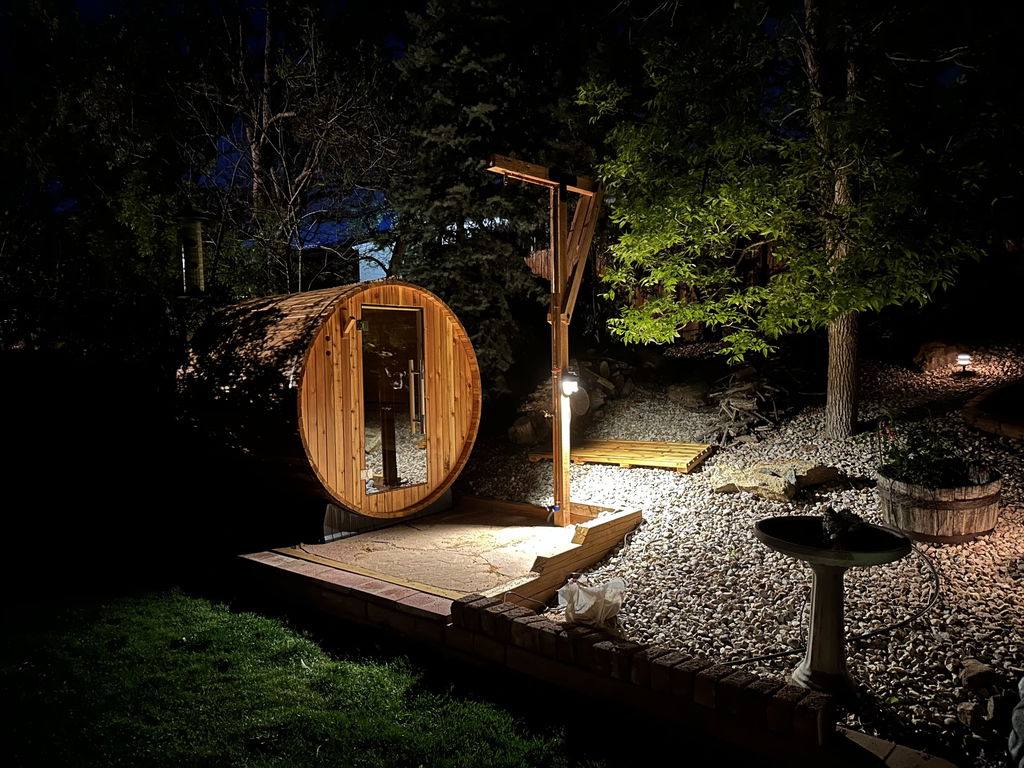
Good communication, easy delivery, easy set up, easy operation, great value. Recommended!
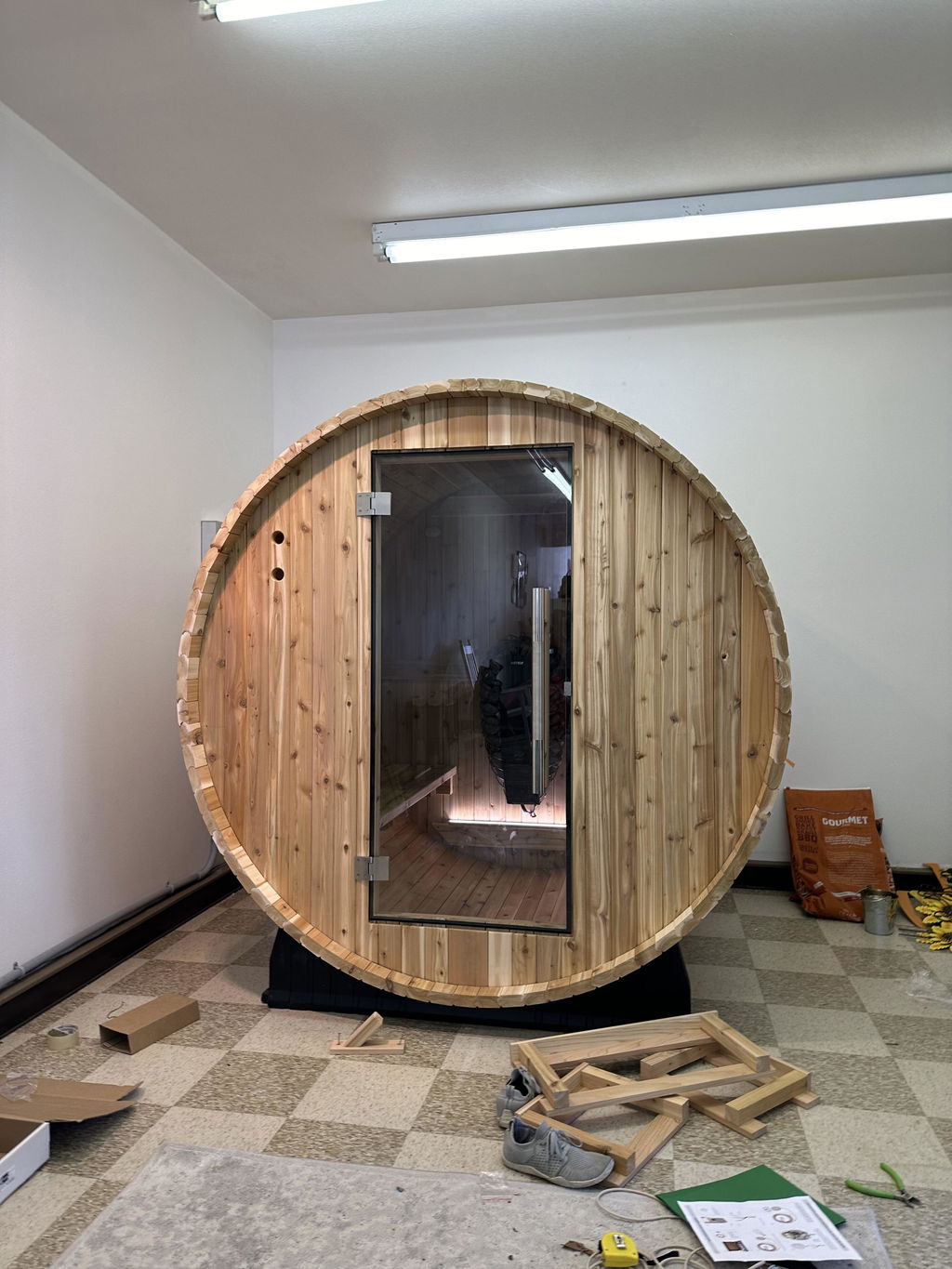
We ordered the 4 person barrel sauna and love it! We wanted a little extra space for the 2 of us/guests and it’s great. We could definitely fit 4 people in it if we needed. We use it every single day. It took about 10 weeks to get here because they build it specifically for the order. Putting the barrel together was fairly easy with 2 people. The electrical and the heater definitely required an electrician to install as we could have not done it alone.
We ordered the biggest heater (harvia spirit 8kw) and it heats up the sauna in about 15 mins inside our 40-50° garage. Overall this style of sauna is hotter and you sweat a lot faster than in an infrared sauna. I truly 10/10 recommend!
Pic is of us in the middle of building it.
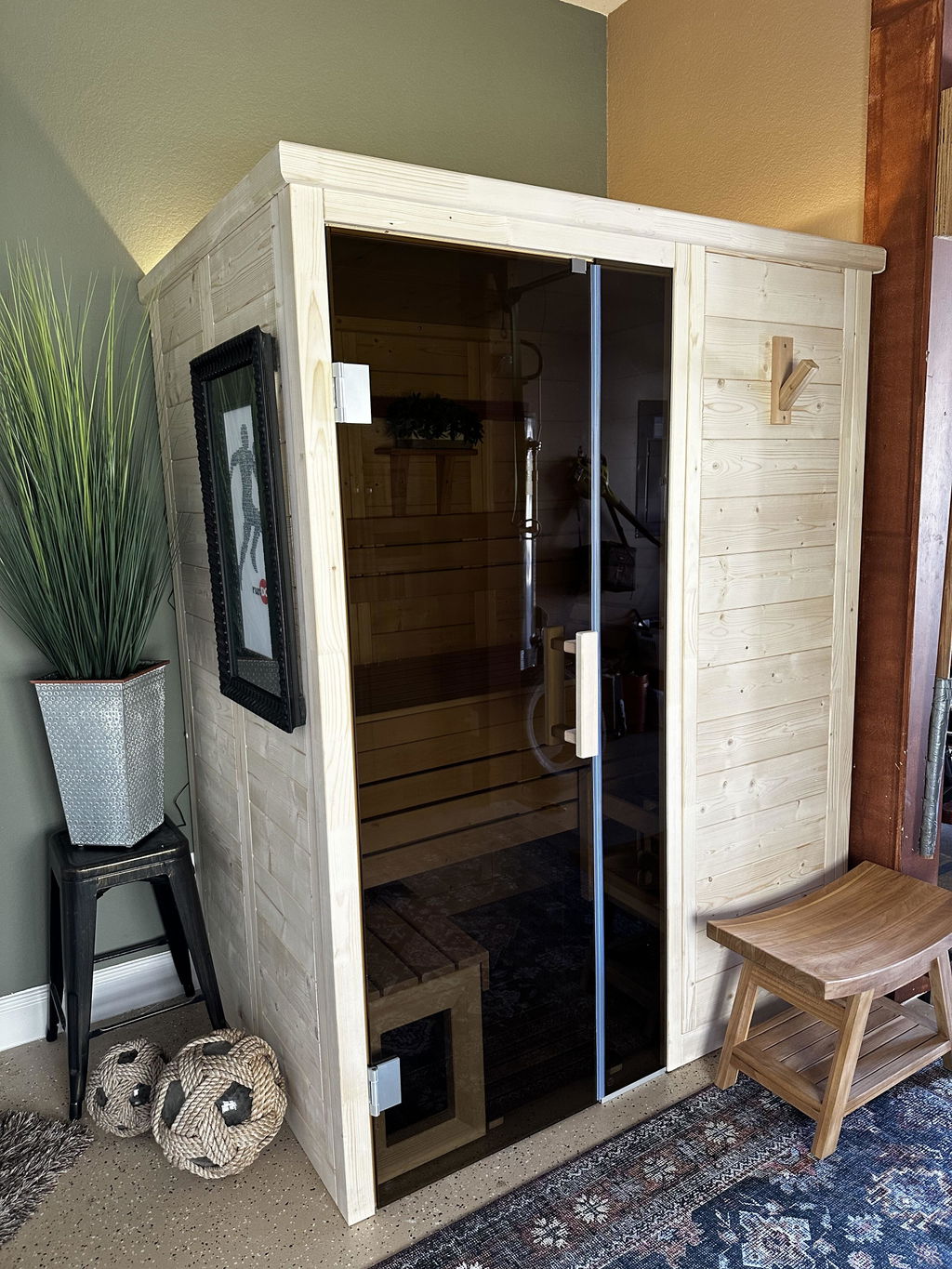
Took me about 6 hours over 2 evenings to assemble almost all by myself. Had a pro run a new circuit from my panel. Very well made and assembly was straightforward. Heater is well sized and reaches operating temperature in under 30 minutes.
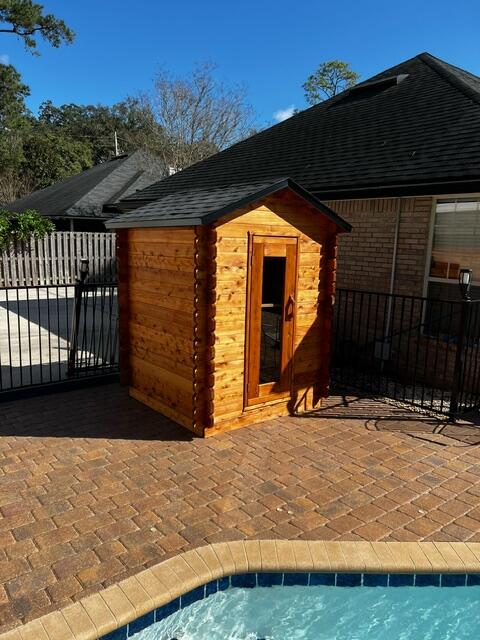
Great sauna very easy to assemble
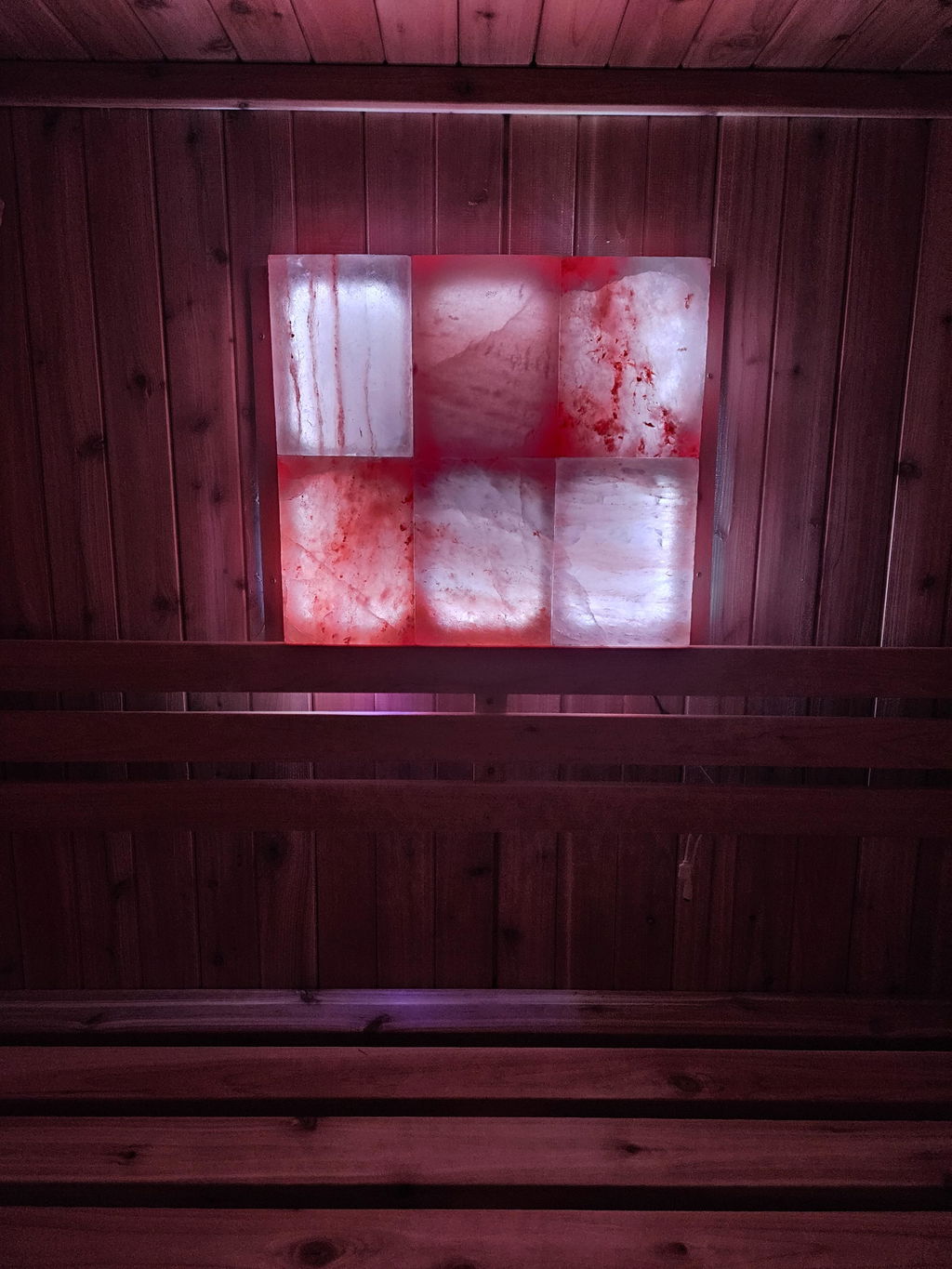
The salt panel was a great addition to our Madison Sauna. It has excellent grain which is accented by the amazing color lights that glow through the panel. Also when you hit the rocks with a splash of water you can feel the heat bounce off the panel. Great addition if you are considering this option.
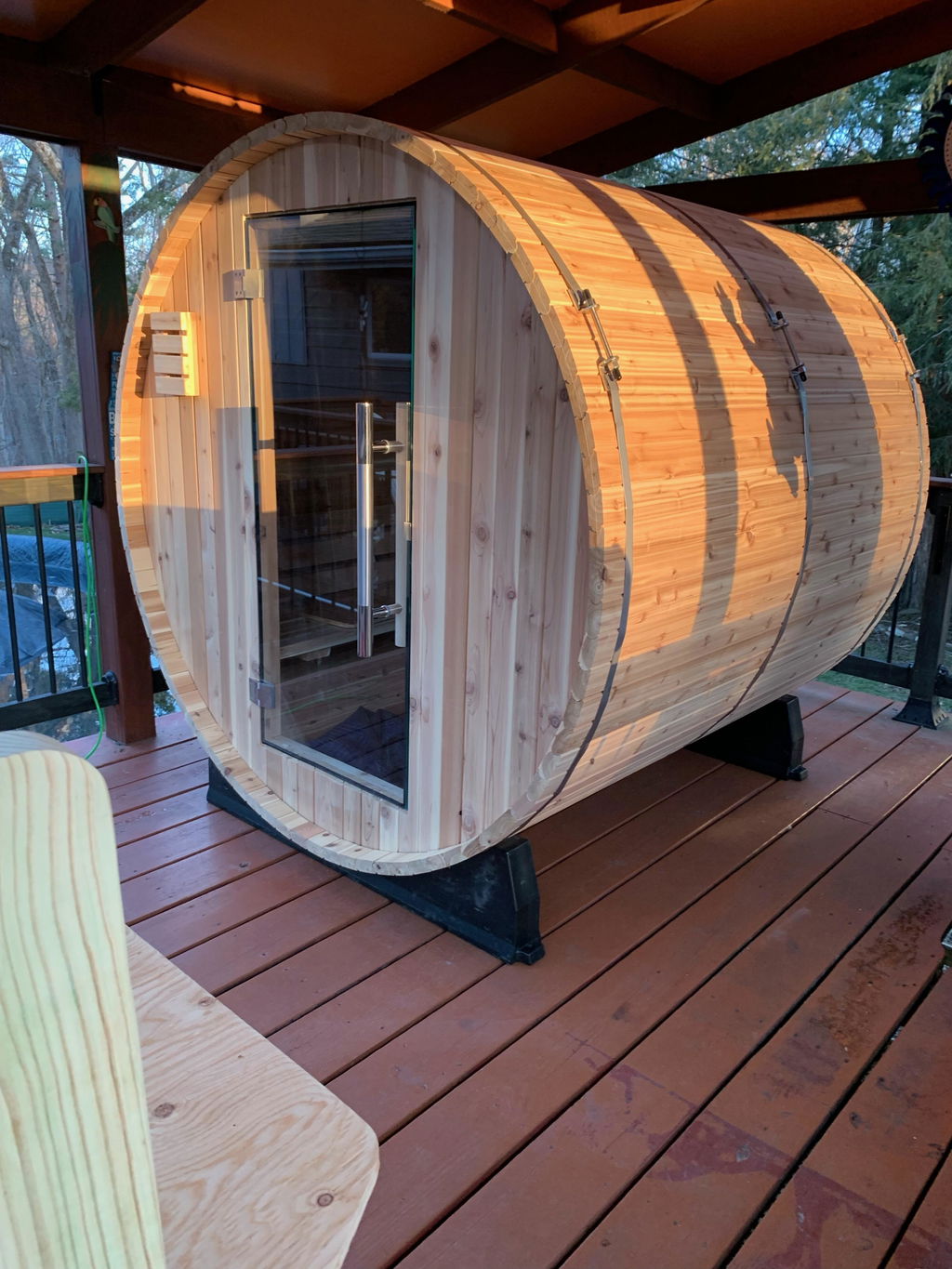
We can say enough about Sauna World there customer support is great! Our Pinnacle Sauna from Almost Heaven is epic.
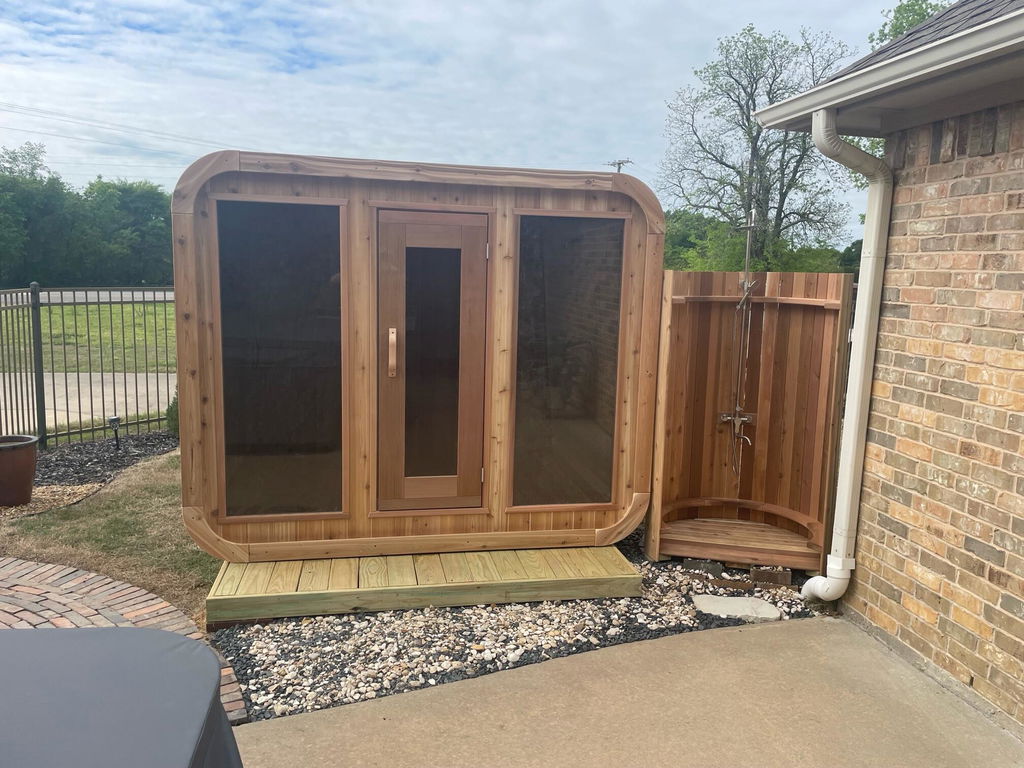
The finish and quality is outstanding and it was quick and easy to assemble.

We are thrilled with our mini pod!! It came well shipped and our friend assembled it in 11 hours! Wow! We cannot wait to get healthy and sauna it up!

Beautiful sauna!!! Much easier than I expected to assemble, took a total of 4 hours. Can't wait to get warm by the pool on those cool evenings. Customer service was excellent..
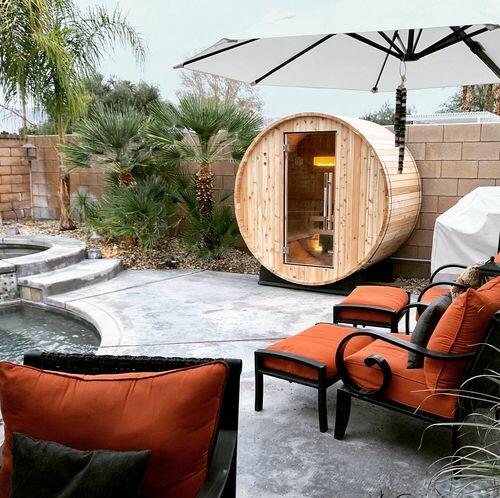
Purchased a 2 person Almost Heaven barrel sauna and were delighted with the product. The order process was quick and easy, the sauna arrived on-time, installation was simple, following the provided instructions, and the sauna is extremely high quality. We’ve used it daily for over 2 weeks and quite frankly I don’t know how we lived without it. If I had it to do over again I wouldn’t change a thing... except maybe purchasing a 4 person model to easier share with friends!
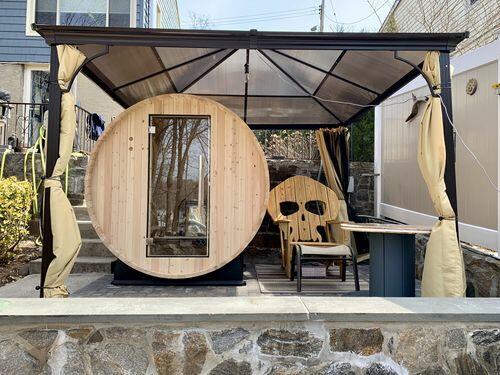
Great Customer Service and a breeze to put together.Excellent shipping and the Sauna is top notch, couldn’t be happier